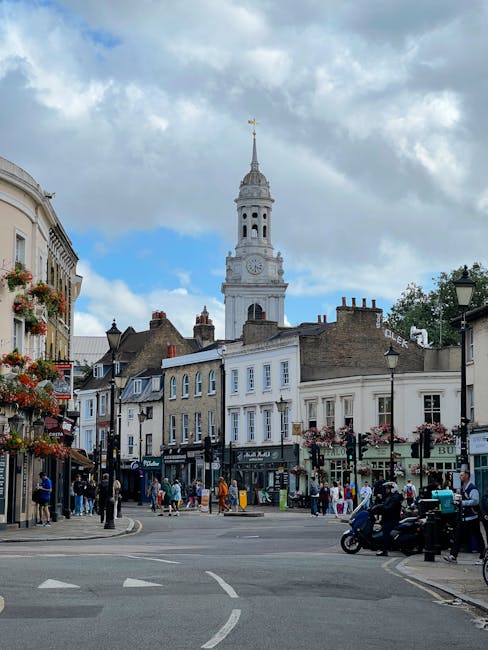
Putney office & retail cleaning: quotes for local businesses

If you run a shop, studio, small office, clinic reception, or mixed-use workspace in Putney, getting the right cleaning quote can feel oddly complicated. You want a fair price, yes, but you also want a team that turns up on time, understands footfall, and doesn't make your morning harder than it needs to be. That is really what Putney office & retail cleaning: quotes for local businesses is about: finding a service that fits your premises, your schedule, and the way your business actually operates.
In a place like Putney, where busy high streets, riverside foot traffic, and commuter routines all shape the day, the difference between a basic tidy-up and a proper commercial clean can be surprisingly noticeable. This guide breaks down how quotes work, what affects pricing, what to ask before you book, and how to avoid the usual traps. No fluff. Just the stuff that helps you decide with confidence.
- Why it matters
- How quotes work
- Key benefits
- Who needs this service
- Step-by-step guidance
- Expert tips
- Common mistakes to avoid
- Tools, resources and recommendations
- Law, compliance and best practice
- Options and comparison
- Real-world example
- Practical checklist
- Conclusion
- Frequently asked questions
Why Putney office & retail cleaning: quotes for local businesses Matters
Let's face it, a clean workplace is not just about looking neat for visitors. In offices and retail spaces, cleanliness affects first impressions, staff morale, hygiene, and even how smoothly the day runs. A dusty reception desk, streaked glass, or a tired-looking shop floor can quietly change how customers feel the moment they walk in. And staff notice too.
For local businesses in Putney, the need is often more specific than "general cleaning". An office may need desks, bins, kitchens, toilets, and touchpoint cleaning after trading hours. A retail unit may need floor care, window cleaning, fitting room attention, display dusting, and a quick reset before opening. The service has to suit the space, not the other way around.
That is why quotes matter. A proper quote helps you compare like with like. It clarifies what is included, how often work is done, which cleaning products are used, and whether extra tasks cost more. Without that detail, the cheapest price can end up being the most expensive mistake. Bit of a classic, really.
There is also a local angle. Putney businesses often deal with mixed property layouts, shared access, limited loading space, and cleaning windows that can't be handled in the middle of trading. A local cleaner who understands these practicalities can save time and reduce disruption. That is worth something, even if it does not show up as a line on the first quote.
Expert summary: A good commercial cleaning quote should do more than state a price. It should explain scope, frequency, timing, products, staffing, and any extras so you can judge value properly.
How Putney office & retail cleaning: quotes for local businesses Works
Commercial cleaning quotes are usually built around the space itself. A cleaner or cleaning company will want to know the size of the premises, the number of rooms or zones, how much daily traffic the site gets, and what level of clean you expect. A small office with ten desks is one thing; a retail store with constant customer flow is another entirely.
In practice, the quoting process often looks like this:
- Initial enquiry: You share basic details such as location, type of business, floor area, opening hours, and the cleaning tasks you need.
- Site review or walkthrough: A cleaner may visit the premises, or ask for photos and a checklist if an in-person visit is not needed.
- Scope definition: The service provider sets out exactly what will be cleaned, how often, and whether tasks like deep cleaning or window cleaning are included.
- Quote issued: You receive a written quote, ideally with clear pricing, schedule options, and any conditions or exclusions.
- Review and adjustment: If your needs change, the quote can usually be adjusted before work begins.
The key thing to understand is that a quote is only useful if the scope is clear. If one company prices weekly office cleaning and another prices daily retail opening cleans, those numbers are not comparable. Same with carpet care, hard floor maintenance, or washroom replenishment. Apples and oranges.
For local businesses, the best quotes usually feel specific rather than generic. They may mention early morning or evening schedules, after-hours access, keys or alarm procedures, and how cleaning will work around stock deliveries or staff handovers. That level of detail is a good sign.
If you are comparing a few providers, it can help to look at their broader service standards too. For example, a company that clearly sets out its pricing and quote approach is usually easier to deal with than one that keeps everything vague until the last minute.
Key Benefits and Practical Advantages
The obvious benefit is cleanliness, but there is more to it than that. Good commercial cleaning supports business presentation, safety, and consistency. When a workspace feels cared for, people tend to treat it that way. Simple, but true.
- Better customer experience: Clean floors, tidy counters, and fresh-smelling rooms make a stronger impression than most businesses realise.
- Less disruption: A scheduled clean before opening or after closing reduces interruptions during trading hours.
- Improved staff comfort: Clean kitchens, washrooms, and desks make day-to-day work easier and more pleasant.
- More consistent standards: Regular commercial cleaning helps stop small issues from turning into bigger ones.
- Better presentation for inspections or viewings: Especially useful if you host clients, landlords, or prospective tenants.
- Flexible scope: You can usually tailor the service to your building, budget, and trading pattern.
There are practical advantages too. A local team can often respond faster, adjust schedules more easily, and understand the quirks of nearby commercial premises. That matters when you need someone to work around delivery bays, shared entrances, or the odd London weather-induced mess that turns up on your flooring by 9 a.m.
For businesses that want a cleaner to cover both office and retail areas, a single coordinated service can simplify things. Less admin. Fewer handovers. One standard. That alone can make life easier for a busy manager.
You may also want a provider that can support wider cleaning needs over time, such as office cleaning for back-of-house areas or window cleaning when shopfronts start looking tired. It is often better to plan for the whole site than to patch things together later.
Who This Is For and When It Makes Sense
This service is a strong fit for businesses that need a tidy, professional premises without the hassle of managing cleaning in-house. That includes independent retailers, estate agencies, salons, coworking spaces, small offices, medical reception areas, and mixed-use premises where public areas and staff areas need different levels of attention.
It is especially sensible if:
- your team is spending too much time doing basic cleaning tasks themselves;
- your premises are starting to look tired despite regular surface tidying;
- you need cleaning outside normal trading hours;
- your floors, glass, or washrooms need more consistent care;
- you want a predictable budget instead of ad hoc one-off callouts;
- you manage a site with customer footfall and need a more polished presentation.
If your business gets through the week by "whoever has five minutes hoovering the corner", then yes, a proper quote is probably overdue. There is no shame in that. It happens everywhere.
On the other hand, if your site is very small and only needs occasional support, a full contract may not be the right fit. In that case, a one-off deep clean or periodic refresh might be more practical. The goal is not to buy more cleaning than you need. The goal is to match the service to the real pattern of use.
Businesses with specialised surfaces, such as polished hard flooring, display fixtures, or fabric seating, may also benefit from services like hard floor cleaning or upholstery cleaning where needed. Not every workplace needs them every week, but when they matter, they really matter.
Step-by-Step Guidance
If you want a quote that is genuinely useful, the process starts with a little preparation on your side. Nothing dramatic. Just a bit of clarity. Here is a simple way to handle it.
- Map your space. Note the number of rooms, floors, toilets, kitchen areas, customer zones, and any high-traffic sections.
- Decide on frequency. Daily, several times a week, weekly, or a seasonal clean? Be realistic about usage.
- List your priorities. For some businesses it is washrooms. For others it is floors, front-of-house areas, or glass.
- Highlight access details. Alarm codes, opening times, loading restrictions, lift access, keyholding, and any shared entrances all matter.
- Ask what is included. Does the quote cover bins, sanitising, vacuuming, mopping, kitchen wipe-downs, and toilet replenishment?
- Check for exclusions. A quote should clearly say what is not included, such as consumables, deep cleaning, or specialist tasks.
- Compare on value, not just headline price. Look at scope, reliability, flexibility, and communication.
- Confirm the review process. Good services allow you to update the scope if the site changes.
One small but useful habit: walk the premises at closing time and note what actually gets dirty over the course of a day. The sticky patch near the entrance, the fingerprints on glass, the crumbs under the counter, the kitchen sink that somehow attracts everything. Those real observations make for far better quotes than a generic "please clean everything" message.
If the business has recently had building work or a refurbishment, you may need a more intensive initial clean before settling into routine maintenance. In that situation, deep cleaning or even after builders cleaning may be more suitable before the regular schedule starts.
Expert Tips for Better Results
The best cleaning relationships are clear from the start. In our experience, a few small decisions early on save a lot of back-and-forth later. Nothing fancy. Just good housekeeping, in the proper sense of the phrase.
Be specific about the "finish line"
Don't just say you need the office cleaned. Say what "clean" looks like for you. Shiny reception glass? Clear desks? Bin liners replaced? Toilets reset and stocked? The more concrete you are, the easier it is for the provider to quote accurately.
Choose timing that suits your trading pattern
Retail spaces often need cleaning before opening or after closing, while offices may prefer evening visits or very early morning slots. A service that works against your rhythm will quickly become annoying. Not impossible, just annoying. And that wears people down.
Ask about supervision and consistency
If multiple cleaners may attend, ask how quality is monitored. Who checks the work? How are issues raised? If you value the same standard every time, consistency matters more than the cheapest rate.
Build in flexibility for busy periods
December trading, sale periods, stock movements, or client events can all change the cleaning load. A good quote should leave room for temporary adjustments without turning into an argument.
Consider presentation-critical areas first
If you're not sure where to start, prioritise the spaces customers and staff notice most: entrance, floors, toilets, and glass. Those areas have an outsized effect on perception, even when the rest of the premises is fine.
A sensible provider should also be able to explain safety, insurance, and working practices clearly. If those conversations feel awkward or evasive, that is usually worth paying attention to. Not a dealbreaker every time, but definitely a nudge to ask more questions.
Common Mistakes to Avoid
Commercial cleaning quotes can go wrong in a few predictable ways. Most of them are avoidable if you slow down a little and ask the obvious questions.
- Comparing prices without comparing scope: Two quotes can look similar while covering very different tasks.
- Leaving out access details: If the cleaner can't get in easily, the service becomes unreliable before it begins.
- Ignoring washrooms and touchpoints: These are often the areas customers and staff feel most strongly.
- Forgetting consumables: Toilet paper, soap, bin liners, and paper towels may or may not be included.
- Assuming "regular cleaning" covers specialist work: Deep cleans, carpet care, or hard floor treatments may be separate.
- Choosing only on price: Cheapest can be fine. Cheapest plus unclear scope is where headaches begin.
- Not checking the complaint or review process: If something goes wrong, you want a clear route to fix it.
There is also a subtle mistake businesses make: they ask for a quote for the current mess rather than the business they want to run. That can lead to under-specifying the work. A cleaner can only quote for what they know. If the real need is a polished front-of-house, a maintained office, and a spotless washroom routine, say so.
And yes, people do sometimes leave out the entrance mat area until the weather turns. Then suddenly it matters very much.
Tools, Resources and Recommendations
You do not need fancy software to organise commercial cleaning, but a few simple tools can make life much easier. Most of this is low-tech, which is refreshing in a world of apps for everything.
- A room-by-room cleaning list: Helps you describe the scope clearly when asking for quotes.
- A weekly usage log: Useful if your business has fluctuating footfall or seasonal peaks.
- Photo notes: A few pictures of floor types, washrooms, and front-of-house areas can help with quoting.
- Access instructions: A simple document covering entry, alarms, keys, parking, and security.
- Site standards checklist: A brief internal guide for what "good" looks like on your premises.
When choosing a provider, it helps to read the company information around trust and working practices. The pages on about us, insurance and safety, and health and safety policy can give useful context about how a business operates. That sort of detail matters more than people often admit.
If you want a broader picture of the company before inviting a quote, this cleaning company overview can also help you understand the service style and approach. A local business should feel straightforward to talk to, not mysterious.
For businesses thinking about greener practices, waste handling, or office recycling, it may also be worth checking a provider's stance on recycling and sustainability. It is not the only factor, but it is a sensible one if your team values it.
Law, Compliance, Standards, or Best Practice
Commercial cleaning is not just about appearance; it also touches on workplace safety, insurance, and the practical duty to keep business premises reasonably clean and safe for staff and visitors. The exact obligations vary depending on the premises and the type of business, so this section is best read as general best practice rather than legal advice.
In the UK, a responsible cleaning provider should be able to explain how they manage:
- health and safety procedures for staff and clients;
- safe use of cleaning products and equipment;
- access and security arrangements for after-hours work;
- insurance cover relevant to commercial premises;
- basic complaint handling and service correction if standards slip;
- clear terms and conditions so expectations are written down.
For a local business, this should not feel heavy or bureaucratic. It is simply good practice. A provider that can discuss their terms and conditions and complaints procedure openly is usually easier to work with than one that gets vague when you ask basic questions.
It is also sensible to make sure you understand how payments and data are handled, especially if you are setting up repeat invoicing or recurring service visits. The pages on payment and security and privacy policy can help here.
To be fair, most businesses do not want a lecture on policy. They just want to know the cleaners will arrive, do the work properly, and not create extra risk. That is a very reasonable expectation.
Options, Methods, or Comparison Table
When asking for quotes, you will usually be choosing between different service styles. Here is a practical comparison to help you think it through.
| Option | Best for | Strengths | Watch-outs |
|---|---|---|---|
| Regular office cleaning | Desks, kitchens, washrooms, common areas | Consistent standards, predictable cost, low disruption | May not cover specialist tasks without extras |
| Retail cleaning | Shop floors, entrances, glass, customer-facing zones | Strong presentation, better footfall experience | Needs timing that fits trading hours |
| One-off deep clean | Move-in refresh, seasonal reset, post-event clean | Heavy-duty attention in one visit | Not a substitute for ongoing maintenance |
| Combined office and retail package | Mixed-use premises | Simpler management, one provider, more joined-up service | Needs a clear scope so nothing gets missed |
For many local businesses, the combined model is the sweet spot. One team, one standard, one point of contact. If the premises include a back office and a customer area, it can be much easier to keep everything aligned under one cleaning schedule.
If your site has carpets or rugs in public-facing zones, you may also want to factor in carpet cleaning or rug cleaning from time to time. These are the sort of add-ons that often get forgotten until the floor starts telling its own story.
Case Study or Real-World Example
Here is a simple, realistic example. A small retail-and-office business in Putney had one front-facing shop area, a back office, a staff kitchenette, and a single customer toilet. At first, the owner asked for "a weekly clean" and received a few broad quotes. The prices looked different, but the scope was all over the place.
One provider priced a quick wipe-down of visible surfaces only. Another included bins, washrooms, kitchen touchpoints, floors, and glass doors. A third offered a deeper evening clean with periodic extra attention to the entrance mat and display shelving. Not surprisingly, the quotes did not match because the service levels did not match.
Once the owner listed the actual pain points - muddy entrance marks after wet weather, fingerprints on glass, the staff sink area, and the toilet reset before morning opening - the picture became much clearer. The final quote was easier to compare because it was based on real use, not a vague request. That is the trick, really.
After the service started, the biggest benefit was not just appearance. It was the reduction in daily interruptions. Staff stopped trying to squeeze in last-minute tidying before the doors opened. The space felt calmer. More professional. Less scrappy around the edges. A small change, but you can feel it when you walk in.
Practical Checklist
Use this checklist before requesting or reviewing a quote. It keeps the process simple and avoids the usual confusion.
- Confirm the type of premises: office, retail, or mixed-use.
- Measure or estimate the size of the areas to be cleaned.
- List the rooms and zones that matter most.
- Decide how often cleaning is needed.
- Note trading hours and preferred cleaning times.
- Flag access issues, alarms, keys, and parking or loading constraints.
- Decide whether consumables are included or supplied separately.
- Ask about insurance, safety, and complaint handling.
- Check whether specialist services are needed now or later.
- Compare quotes on scope, reliability, and flexibility, not price alone.
If you can answer those points clearly, you are already ahead of most quote requests. Honest truth.
Get a free quote today and see how much you can save.
Conclusion
Getting a quote for office or retail cleaning in Putney should feel straightforward. If it feels confusing, that usually means the scope has not been defined properly yet. Once you know what needs cleaning, how often, and when the work can happen, it becomes much easier to compare providers and choose a service that genuinely fits your business.
Good cleaning is one of those things people only notice when it is missing. But in a busy local business, it quietly supports everything else: presentation, comfort, safety, and the sense that your place is well run. That matters more than people sometimes admit.
If you are ready to take the next step, start with a clear scope, ask practical questions, and look for a provider that explains things plainly. That simple approach will save time, reduce stress, and probably improve the day-to-day feel of your premises more than you expect. Small change. Big difference.
Frequently Asked Questions
How do I get a quote for Putney office and retail cleaning?
Send details of your premises, the type of business, the size of the space, your preferred cleaning times, and the tasks you want covered. A clear brief usually leads to a much more accurate quote.
What affects the price of commercial cleaning quotes?
The main factors are floor area, number of rooms, level of footfall, frequency of cleaning, timing, and whether special tasks such as window, carpet, or hard floor cleaning are included.
Is office cleaning different from retail cleaning?
Yes. Offices usually focus on desks, kitchens, toilets, bins, and shared areas, while retail spaces often need more attention on customer-facing floors, glass, entrances, and display areas.
Should I choose the cheapest quote?
Not automatically. The cheapest option can be fine if the scope is clear and the service is reliable, but it is wise to compare what is actually included before deciding.
Can one cleaning service cover both office and retail areas?
Yes, and that is often a sensible choice for mixed-use premises. It can simplify scheduling and help keep the standard consistent across the whole site.
How often should a small local business be cleaned?
That depends on footfall and use. Some businesses need daily cleaning, while others do well with a few visits a week plus occasional deep cleaning.
Do cleaning quotes include consumables like soap and bin liners?
Sometimes they do, sometimes they do not. Always ask. Consumables are one of the easiest things to overlook when comparing quotes.
Should I ask for a site visit before accepting a quote?
If the premises are larger or more complex, yes. A site visit can help avoid missing details such as access issues, floor types, or high-traffic zones.
What should be in a good commercial cleaning agreement?
It should clearly set out the scope of work, cleaning frequency, timings, pricing, exclusions, access arrangements, and what happens if something needs correcting.
Can I book a one-off clean instead of a regular contract?
Yes. A one-off clean is useful for move-ins, post-event resets, or seasonal refreshes. It is a good option if you do not need ongoing service.
How do I know if a cleaner is suitable for business premises?
Look for clear information on insurance, safety, experience with commercial spaces, communication, and how they handle issues if standards slip.
What if my business has special cleaning needs?
Be upfront about it. Floors, upholstery, carpets, windows, or post-renovation work may need extra planning or separate services, and it is better to say so early.